How One Woman’s “Impossible” Journey is Creating a Movement
With a Purpose
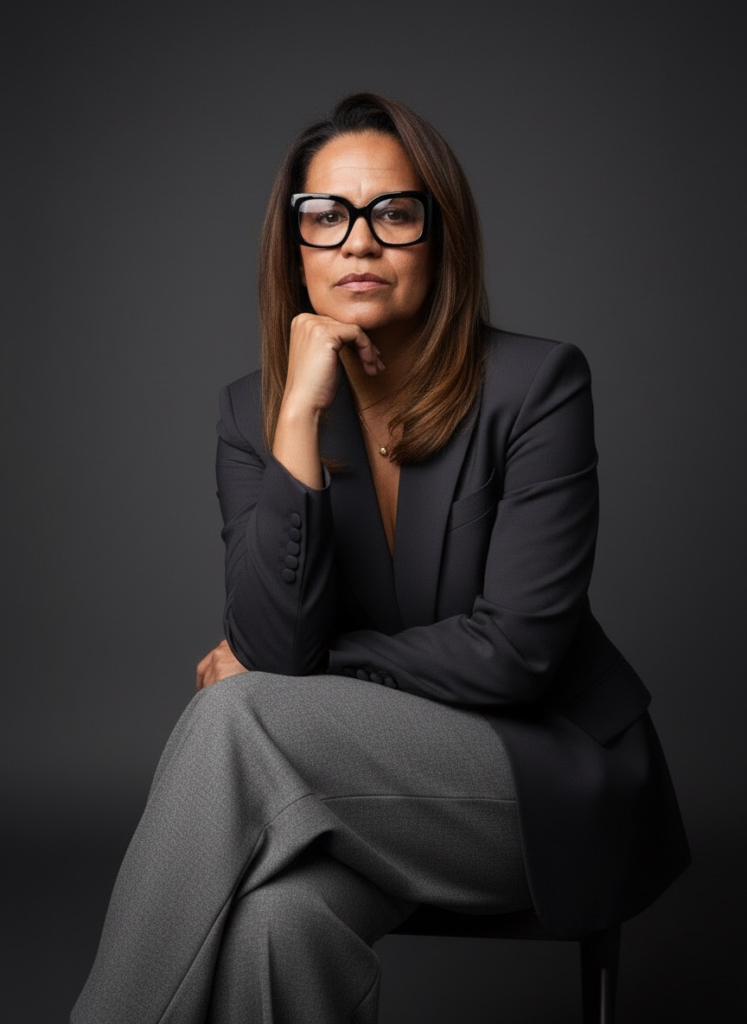
Sitting in her Coventry office, wearing her signature minimalist black (a choice, she’ll tell you, that’s both aesthetic and sensory-friendly), she’s frank about what brought her here: “I spent the last nineteen years raising my autistic son while being autistic myself and not knowing it. That’s not a credential you put on LinkedIn, but it’s the most valuable one I have.”
Her son’s diagnosis at age three could have been a full stop. Professionals told her what to expect: limited progress, lifelong dependency, and narrow possibilities. “They gave me a roadmap to nowhere,” she says, with the kind of directness that characterizes everything she does. “So I threw it out and made a new one.”
The result? Her son progressed from autism level 3 to level 2—not because he became “less autistic,” but because Keila learned to redesign the world around him. That methodology, refined over nearly two decades and informed by her own late autism and ADHD diagnoses, became the foundation of BrainBridg_.
From Education to Evolution
With over 16 years in design education—including four years teaching exclusively at Master’s level at Coventry University—Keila brings an unusual combination to the neurodiversity space. She holds IBECCD Autism Specialist Certification, an MA, and a PGCert, but ask her what matters most, and she’ll point to something else entirely.
“I have what I call the triple perspective,” she explains. “I’m autistic. I raised an autistic child through the entire health and academic systems. And I’ve taught hundreds of students, many of them neurodivergent, how to navigate education that wasn’t built for their brains. That intersection? That’s where the real expertise lives.“
Her signature program, “Clear Screens, Clear Minds,” emerged from watching master’s students struggle not with content complexity but with visual chaos. “An overwhelmed brain can’t learn,” she says simply. “We were creating barriers with our PowerPoints and calling it teaching.“
The Method They Can’t Quite Name
Keila’s approach—she calls it The Cascade Framework© —defies easy categorisation. It’s part pattern recognition, part emotional intelligence, part design thinking. “Many neurodivergent people can see patterns others miss and feel emotional undercurrents that logic alone doesn’t address,” she explains. “That’s not a deficit. That’s a superpower when you know how to use it.“
Her clients range from families seeking support for neurodivergent children to organizations trying to move beyond performative inclusion. The work is bilingual (English and Portuguese), spanning UK, EU, USA, and Brazilian markets.
What 2026 Looks Like
Ask Keila about her vision for 2026 and the answer is immediate: “I want to be on stages where decisions get made. Not just talking about inclusion—changing how it’s built.“
She’s targeting major conferences, developing her signature keynote “I Have A Dream: A Vision for Neurodivergent Belonging,” and scaling BrainBridg_ beyond individual consultancy into a broader movement.
“The world isn’t going to look like 2025,” she says with a slight smile. “Because we’re not waiting for permission anymore. We’re building the world we needed when we were struggling. And that? That changes everything.“